Showing posts with label Lent 4. Show all posts

Monday, March 16, 2026

The Fourth Sunday in Lent, March 15, 2026

Holy Cross Monastery, West Park, NY
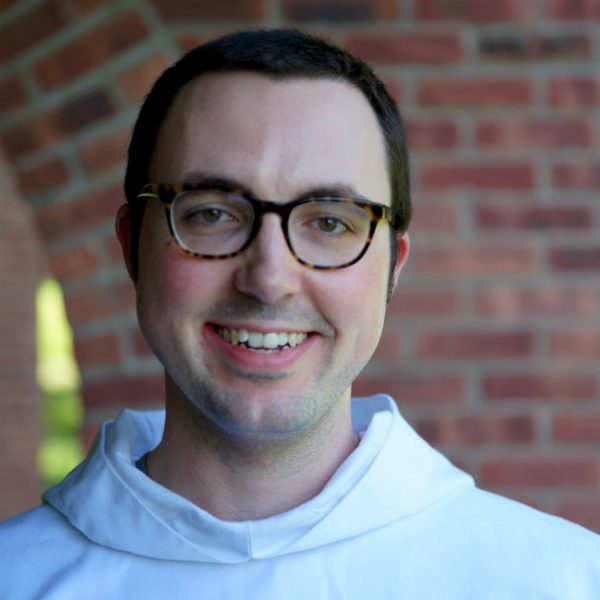
Br. Daniel Hansknecht, OHC

The Fourth Sunday in Lent, March 15, 2026


In the name of the Father, and of the Son, and of the Holy Spirit. Amen.

“Jesus said, ‘I came into this world for judgement so that those who do not see may see, and those who do see may become blind.’”

When the Pharisees overhear this, they ask Jesus the question: “Surely we are not blind, are we?”; simultaneously posing the question and suggesting the answer. But if they assume the answer, why ask at all?

One possibility is because there are no good answers. The Pharisees are wary of Jesus, and this guarded perspective makes his statement come across as rather ominous. Either they are currently blind (a designation whose negative stigmas pervade today’s reading), or they do see and this reversal of fortunes will make them blind! More metaphorically, they might find Jesus insinuating revolutionary thoughts, with the rise of the lowly and casting down of the powerful.

Jesus’s response suggests to me that the very nature of their question was faulty. Notably, he doesn’t answer it outright. Instead of stating his own opinion, Jesus implies that their presumption of knowing the answer itself determined the answer. “Now that you say, ‘We see,’ your sin remains.” I can envision the opposite scenario where the Pharisees ask more humbly, “Are we blind?” and Jesus says, “It is good that you ask, ‘Are we blind?’ for it is through such questions that God’s works might be revealed.”

Returning to the actual text, it seems like Jesus and the Pharisees are having two separate, albeit overlapping, conversations. The Pharisees, by their words and actions, are focused on concerns of the world. They believe sin to be something external; a modifier which determines our fate and status, even from birth, in the same way that luck, happiness, and good fortune signify God’s good graces. As figures of religious authority, they care about the status quo. They care more about the letter of the law, the Law of Moses, than the spirit of the law, whose purpose is to embetter the lives of the Israelites who follow it. It is out of fear of usurpation, the fear that their role in society is being taken from them, that they focus so heavily on the granular details of the blind man’s recovery; anything they can grab onto to shake the power of Jesus’s ministry.

Conversely, Jesus speaks and acts out of concern for the world. His time with us is limited, and, as he said to his disciples earlier, “As long as I am in the world, I am the light of the world.” What does it mean to be the light of the world? I think it is telling that the very next line of text describes the physical preparations which Jesus takes to facilitate the healing of the blind man; the Gospeler going so far as to explicitly mention that Jesus’s actions immediately follow those words. To be the light of the world is to cast out the darkness that blinds us.

As Christians and followers of The Way, we are expected to emulate Jesus. Jesus is the light of the world, and we are children of light. But how do we follow up on actions that are so miraculous? I don’t know about you, but if I spat on the ground, made mud, then rubbed it into some poor soul’s face, I don’t think they’d worship me afterwards. So, I think we’re going to have to be a bit more creative.

Let’s start by breaking down our terms; make them a bit more practicable. What does it mean to be blind? What does it mean to cast out darkness, to be light?

By various definitions, it wouldn’t be inaccurate to say that I am blind. I need glasses. I get into trouble when you start mixing Red with other colors. In other ways too. I know for a fact that I have been blind; and foolish; and clumsily ignorant. And, perhaps unsurprisingly, blind to my own blindness. More broadly speaking, I’d say that the things that blind us are anything that narrows, or cuts off, our vision: adrenaline, fear, lack of oxygen…and, funnily enough, light itself! The very thing that grants us our vision can also strip us of it.

So, what’s the difference between light which illuminates and light which blinds? I would say, acclimation. Have any of you ever hankered for food in the middle of the night? You go down to the kitchen, open the fridge, and are suddenly blinded by the light it emits? Well, the fridge wasn’t trying to blind you! Under normal circumstances, the fridge-lights do their job and make visible the cold recesses of its interior. Or, as Paul says to the Ephesians, “everything exposed by the light becomes visible.” You set yourself up for blindness by wandering around in the dark.

With that in mind, let’s go back and look at my first quote of the day. “Jesus said, ‘I came into this world for judgement so that those who do not see may see, and those who do see may become blind.’” At first blush, this seems to be a 2-step plan: step 1) heal the blind, then step 2) blind those with sight. Now, however, I’m inclined to think that these are both actually the joined outcomes of a singular action: being the light of the world. Jesus has set himself on this path — teaching, healing, flipping tables — and here he spells out the consequences of this path: both the blinding emotions of fear and anger amongst those threatened by him, and the empowering enlightenment of those he helps along the way.

So, again, what are we supposed to do? Paul advises that we, “Take no part in the unfruitful works of darkness, but instead expose them.” Great – that’s a first step. But for me, it doesn’t give the specific set of directions that I’m looking for. But don’t worry, good people! I, like Jesus, also have a 2-step plan which might end up being a 1-step plan.

Step 1) See with the eyes of your heart.

To give credit where credit is due, Step 1 once more comes from Paul. Although we didn’t hear it today, the following passage is taken from that same Letter to the Ephesians: “with the eyes of your heart enlightened, you may perceive what is the hope to which [God] has called you…” This kind of sight is different from our day-to-day vision. It involves, by means of strong empathy and vulnerability, opening our hearts to all of the most impassioned emotions in the world around us: all of the rage, the terror, the desperation, the longing, the fascination, the zeal, the love. We open ourselves to the oncoming waves of these emotions, not to combat them, not to subdue them, or even to agree with them. We open our hearts so that we may see them; these invisible, intangible, sometimes ephemeral aspects of ourselves that our eyes cannot see. We see them with our hearts, and we grant them the dignity of acknowledging their existence as they are. This is the first step to loving anything or anyone: seeing them for who they actually are.

Step 2) Fight against fear.

The 1st verse of Psalm 27 has been on my mind while writing and preparing this homily. It says, “The Lord is my light and my salvation — whom then shall I fear?” As I mentioned earlier, fear is one of the ways we blind ourselves, focusing our attention on just the source of our fear at the cost of everything in our peripheral. As an emergency tool, fear is great; it keeps us alive. But when we hold onto fear, when we live in fear, that’s when we get into trouble. As somebody famous once said, “Fear is the path to the dark side. Fear leads to anger. Anger leads to hate. Hate leads to suffering.”

Repeatedly throughout the Bible, you’ll hear the angels say, “Do not be afraid.” They  have to say this because angels are terrifying! Their sudden appearance, their supernatural nature, and their radiancy shake those who encounter them. But the reason they say this is because, as messengers of God, they have important things to say; things they are worried you will not hear unless you calm down. And so, we fight against fear so that we can be receptive to the will of God.

The reason I believe this 2-step plan is actually a 1-step plan is because I intend it to be cyclical: never ending, as one leads into the other. An Ouroboros of God’s love shaping itself in our lives. In that same way, we could also expand it into a 4-step plan: Step 1) Fight against your own fear, Step 2) See others with empathy and love, Step 3) Teach others to combat their fears, Step 4) Empower the whole world to see with its collective heart.

In conclusion, let me practice what I preach. Please know, genuinely, that I see you. I love you. And I wish for you to go and do likewise. Amen.

Sunday, March 10, 2024

Lent 4 B - March 10, 2024

Holy Cross Monastery, West Park, NY

Br. Samuel Kennedy
The Fourth Sunday in Lent B, March 10, 2024


Click here for an audio of the sermon


I found today’s Gospel passage to be a challenging one to work with.  It contains some of Jesus’ most well-known words — words that are beautiful, gentle, and hopeful.  But, if you are like me, it’s hard to hear them afresh and anew, given how they’ve made a near ubiquitous appearance at every major sporting event in this country for at least as long as I’ve been alive, and are so often coopted by troubled and challenging theologies of salvation.  While I don’t think one homily, especially one I’ve written, is going to be able to free this passage from its complicated cultural reception history, I hope we can even momentarily experience it for the breath of fresh, life-giving air it was intended to be.

Jesus begins this portion of his discourse with Nicodemus in a bit of a strange place — with a reference to the first lesson we heard read this morning — a relatively obscure story from the book of Numbers. In our Gospel lesson, we heard Jesus say, “Just as Moses lifted up the serpent in the wilderness, so must the son of man be lifted up, that whoever believes in him may have eternal life.”

The passage from Numbers places us in the middle of the wilderness after the children of Israel’s liberation from slavery in Egypt. The people were exhausted, tired, and not shy about expressing their discontent.  “Why have you brought us out of Egypt to die in this wilderness, without fresh food or water, and the food we’ve got to eat is just miserable.”  In the story as told in Numbers, God gets irritated with the people's complaining and grumbling and sends a plague of venomous serpents among them.  The serpents bite, injure, and kill many of the people.  As their suffering mounts, the people begin to beg Moses for forgiveness, and what God tells Moses to do, to free the people from their suffering — is fascinating. God tells Moses to create a serpent of bronze an image of the agent of their suffering, and if the people would but look upon the image, they would find healing and relief.  
Now the concept we see playing out in this text seems to be based upon a principle commonly held in many ancient systems of medicine where a small amount of a poisonous or virulent substance would be used to counteract a larger dose of the poison or virulent substance itself.  It’s not entirely dissimilar from the concept of vaccines where, we take a a tiny subset of that which would harm us — perhaps a few unique surface proteins from a virus, if you will, to provide us with protection from overwhelming infection.   

Fine and dandy you say, but why is Jesus referencing this principle when he is explaining the way of salvation to Nicodemus, a leader among the Pharisees?
Chapter 3 of the Gospel of John opens with Jesus describing the path of conversion as a process of rebirth.  This metaphor was understandably confusing to Nicodemus, so Jesus tried again here, to describe how the way of salvation he was proclaiming worked.

“Just as Moses lifted the serpent in the wilderness, so must the son of man be lifted up, that whoever believes in him will not perish but have everlasting life.  For God loved the world in this way, that he gave his only Son, so that everyone who believes in him, will not perish, but have everlasting life.”  

It’s a condensed soteriology to be sure.  But before we can discuss the nature of the cure, it would be good to remind ourselves of the malady — the fiery serpents —  we are being delivered from.

A crisis of belonging has “ailed” us since the dawn of our human story — this sense of estrangement that is coupled with a longing to belong —to belong within our community, with our God, and with ourselves.    We see these tensions echoed in our sacred texts as early as the story of Adam and Eve.  A fundamental challenge that we have is that we seem to be nearly hard-wired to conceive of belonging as a limited resource, and we tend to turn our efforts to obtain that limited resource into a zero-sum competition with those around us.
One of philosopher RenĂ© Girard’s key insights was that we humans tend to build social cohesion — our sense of belonging — on the back of exclusion. And these dynamics work themselves out no matter how large or how small the community is — be it as large as a nation state or as small as a family, or a group of friends.  As rivalry and competition grow within the community (along with their attendant social tensions and, in some cases, violence) human societies will often select a scapegoat —a person or group who is blamed for the turmoil and conflicts within the community. The scapegoat becomes the target for all of that collective blame and hostility, and is often subjected to violence or expulsion as a means of purging the community of its tensions and conflicts.  

This often happens subconsciously, but the striking thing is that this process works — at least temporarily.  For a season, social cohesion and sense of safety in belonging are restored, but in the long run, this mechanism only perpetuates cycles of violence, as the social order, the “sense of safe belonging,” is maintained via cycles of ritual expulsion and violence.  The irony of building community by this mechanism is that one is never actually ever safe — subconsciously we all know that we might find ourselves selected for expulsion at the next round of sacrifice— and this leads to deep, subconscious anxiety at both the group and individual levels.

And we participate, I participate, in these patterns of scapegoating and sacrifice all the time.

“The Gospels show us that Jesus understands this mechanism,” of inclusion via exclusion; (Allison, 152-153) of maintaining social cohesion and order through expulsion, and Jesus understands that the religious and political structures of this world depend on this mechanism and therefore often unconsciously shore up these sacrificial cycles.  Through his life and ministry, Jesus lures the mechanism and these institutions into behaving according to their usual patterns, and that, predictably, gets him killed.  He dies a death of shame and suffering on the edges of the City —lifted high on the beams of a cross.  
Jesus dies, as countless others have and will continue to die — alone, expelled, and rejected. In fact, even at his death he’s surrounded by two others suffering a fate the same as his— a death on the fringes of society, having been sacrificed to the idols of shaky social cohesion and fragile political peace.
But Jesus endures this precisely in order to reveal that the whole exercise is unnecessary — to reveal to us that there exists the possibility of another way of being together. With Jesus’ reference to the story of the fiery serpents, it’s as if he is saying, “My death is going to look like the very thing that plagues you — it is going to look like one more ritual expulsion, one more sacrifice,” but, this time, because the Victim is the very wellspring of life himself, his death strips the sacrificial system of its imagined divine imprimatur allowing it to begin to wither from the roots up.

“For God loved the world in this way, that he gave his only Son, so that everyone who believes in him, will not perish, but have everlasting [overflowing, abundant] life.”  

“Indeed, God did not send the Son into the world to condemn the world, but in order that the world might be saved through him.”

The only One who very rightly could judge us and condemn us via exclusion has done precisely the opposite. Instead of excluding us, he has instead welcomed us into a state of beloved belonging that is grounded securely in the unending flow of the life and love of the Trinity.
We are welcomed into the light of beloved belonging.  

As verse 21 reminds us, it is a bright, revealing light — a light where we are seen for who we are, faults and all, the good, the bad, and the ugly.  But what this light most clearly reveals is just how deeply we are loved.  And because it is the light of beloved belonging, we can stand in that light with hope and rest and freedom from fear.  And now that we are set free from the need to cast others out to secure our own place in this community, we can instead, stand like Jesus did with outstretched arms inviting others off of the sacrificial altars of our own making and into this marvelous light of beloved belonging.  If that isn’t a life that pulsates with the rhythms of eternity, I don’t know what is.
So the next time we see John 3:16 emblazoned on a placard behind home plate, may we remember that we, the real us, the us with all our faults and imperfections stand in that eternal light of beloved belonging and what it reveals most clearly is just how deeply we are loved.

Sunday, March 19, 2023

Lent 4 A - March 19, 2023

Holy Cross Monastery, West Park, NY

The Rev. Samuel Kennedy
The Third Sunday in Lent, Year A - Sunday, March 19, 2023


In the name of God.  Lover, Beloved, and Love Overflowing. As you listened to the proclamation of this week’s Gospel lesson, one of its unique characteristics may have stood out to you – it is quite long!  While a brisk narrative pace is perhaps more a characteristic of the Synoptics than John’s Gospel, we are used to things proceeding at quite a clip – especially in the healing narratives.  The plot we are familiar with proceeds, more or less, as follows:  We will find Jesus on his way to or from somewhere with his disciples when they encounter someone with an illness or a disability.  Jesus will heal the individual, there will be a bit of theological discourse or conflict related to the healing, and then the plot will move on, following Jesus to the next scene in the story.
While our lesson this morning initially appears to take this shape and pace we are accustomed to, we will discover rather quickly both the pace and shape of the narrative changing under our feet.  Our author decides to linger for a bit in this story.  In fact, for quite some time, Jesus drops out of the scene entirely, as John tightens his focus on the man who had this encounter with Jesus, is radically changed by this encounter, and then begins to work out the meaning of this encounter with his community.  
As I worked with this text, I found it was inviting me to change the pace I brought to it.  I wanted the text to move more quickly than it was, I wanted the message to be clearer than I was experiencing it to be.  Instead, I was invited to sit with the story, to watch this encounter with Jesus play out in this man’s life and his community.  I was going to have to slow down.
  
This story begins familiarly enough, Jesus is making his way somewhere with with his disciples, and they see a man, identified to us as one who had been blind from birth.  The disciples, bless them, seem prepped for the standard narrative pace here as well – they jump right to theological deliberation.
“Rabbi,” they ask, “who sinned – this man or his parents that he was born with blindness?”  Blindness, as their question reveals, was a complicated thing in first century Jewish thought.  While the law of Moses required the protection and care of people with blindness, there were limits to their inclusion in Society – particularly in cultic life.  In the popular consciousness of the time, bad things, like blindness, happened to people for a reason – usually sin – either their own or their family’s.  The end result of this, of course, is a degree of objectification of the person with blindness. The man in our story quickly became a canvas for theological/metaphysical discourse and moralistic musing.

And while we might be quick to dismiss the disciples’ question as one that represents an antiquated and ableist perspective, I think we’ll still find similar impulses within us today.  Some part of us seems to long to keep the people in our lives, the world around us, and perhaps most importantly, the world within us in categories that are clear to us, and help make sense of it all.  Such organization of the world is certainly necessary, both internally and externally, and seeking to understand why things are the way they are is an incredibly important human task.  However, from the very beginning our text seems to warn us against getting too settled with those explanations.  It would seem that thinking we understand how it all works can lead us to miss out on the inbreaking of the Divine in our midst.

Jesus’ reply to the disciples can seem a bit problematic as well, if we approach it as a categorical response to the questions of theodicy.  His disciples ask him, “Rabbi, who sinned, this man or his parents, that he was born blind?”  Jesus replies to them, “neither this man nor his parents sinned; this happened that the works of God might be displayed in him.”  If we try to apply Jesus’ reply too broadly, as an answer to the overarching question of “why do bad things happen?” we’ll find it to be overwhelmingly underwhelming.  I was helped by a commentator here, who pointed out that the grammar would allow for a translation that more clearly reveals the imperative form used here, “Neither this man nor his parents sinned, now may the work of God be revealed in him!”

Jesus then stoops down, spits, and kneads together dirt and saliva to make clay, much as John kneads together language that recalls the Creation stories in the Hebrew Scriptures.  Jesus places this clay on the man’s eyes and sends him to go wash his eyes in the pool of Siloam.  The man obeys and we are told that “he came home seeing.”  This is often where the story would end, but in today’s reading, the story is just getting started.  

What are the echoes of this healing in the man’s life?  Is he welcomed into society, his good fortune celebrated by his neighbors and family? After all, the alleged root cause of his exclusion had been removed. Well, no.  His life and everything around him gets thrown into disarray. “His neighbors and those who had formerly seen him begging asked, isn’t this the same man who used to sit and beg?  Some claimed he was, others said, ‘no, he only looks like him.”

Healing can destabilize us, and the emotional and relational systems we inhabit.  We seem to innately resist the idea that an encounter with the Divine might be real enough to change us or those we live or work with.  

The man’s reply in the midst of this confusion is both simple and profound.  He states, “I am the man.”  Here, he is borrowing the formulation used over and over again by Jesus in this Gospel as he identifies with the Divine name, I am who I am.  John appears to be linking the healed man’s growth in agency with his status as an image bearer of the Divine. 

The man’s friends and neighbors, with their own world in disarray, ask for the religious leaders to weigh in on the matter.  We see the same dynamics play out within that community as well.  The leaders interrogate the healed man multiple times, call his family in for questioning, and do their best to force him to fit into their understanding of how the world works.  Throughout it all, the man bears simple, clear, (and at times quite witty) witness to his encounter with Jesus.  The religious leaders, much like his neighbors and family ultimately refuse to make their hearts and minds vulnerable to the shock that this healing offers to their hearts and system, and cast the man out.

Isn’t this so often what we do?  And before we think about this in the framework of the systems in which we live and work – lets reflect first on our impulses toward ourselves.  So often, after our hearts have been touched by an encounter with God, and we begin to shift our way of being with our selves and others, perhaps living with a bit more agency, perhaps taking steps into the freedom of newfound sobriety or just a bit more ease with who we are....when we do this, our internal systems begin to rage and deny this work of God.  Sometimes the systems around us do too.  

The ending of this story is not what we might expect or hope for.  By virtue of this healing, the very thing that was supposedly keeping this man from full inclusion in the life of his community has been removed.  We might hope that those around him would finally adjust and celebrate that.  And perhaps some of them eventually did, but at first, he was even further rejected – utterly cast out of the community.  This can sometimes be the cost of healing; the cost of true encounter with the Divine.  But what we are told is that when Jesus hears that the man had been cast out of his community – the very thing we expected his healing would help resolve – he seeks him out and invites the man into deeper, more abiding relationship with him.

The cost of discipleship, healing, growth in your God given agency can be great, but I hope that our Gospel lesson today can encourage us all that healing is worth the risk.  

May we be given eyes to see the places in our own hearts that God is healing, re-creating, and restoring.  And may God give us the humility we need to watch, ponder, and listen to those around us as they share their own stories of healing.  May we celebrate and uplift that work in their lives even when we don’t fully understand it ourselves.

At the end of our passage, Jesus says, “for judgment I have come into this world, so that the blind will see and those who see will become blind.”  May we confess our blindness in the hope that we will not miss out on the inbreaking of the Divine in our midst.

Sunday, March 27, 2022

Lent 4 C - March 27, 2022

Holy Cross Monastery, West Park, NY

Br. Aidan Owen, OHC

Lent 4 C - March 27, 2022


In the name of the One God, who is Lover, Beloved, and Love Overflowing. Amen. One of the great gifts of monastic life is being able to see God’s mercy at work in your brothers. It’s very easy to see other people’s faults. They have a way of glaring at us. But to see their virtues—and more, to see those virtues grow slowly and eventually flower—that takes time, patience, and an attentiveness borne of selfless love and gratitude. Michael Casey, one of the great contemporary commentators on Benedictine spirituality, writes that one of the chief goals of monastic life is to teach us monks mercy. But in order for the monastery to be a school of mercy, there have to be folks around us who need mercy shown to them. Sometimes—actually, quite often, I’m afraid—I'm the one who needs to be shown mercy. That flow of mercy back and forth is one of the forces that binds the monastic community together in the bonds of love. This morning’s gospel reading invites us to explore God’s mercy—and our own—from at least three different angles. First we have the younger son, the eponymous prodigal. Conversion is relatively simple for this brother. For all his maddening irresponsibility, he is so loveable. That doesn’t mean it’s easy. I’m sure, like all conversion, it hurts like hell. But his life is so out of control that it presents him with countless opportunities to wake up. When he comes to himself and makes the journey home to his father, we get a scene that can soften the stoniest heart. But while he was still far off, his father saw him and was filled with compassion; he ran and put his arms around him and kissed him. Before the son can get out the speech he has prepared, the father puts a robe around him and orders a feast. For this son of mine was dead and is alive again; he was lost and is found! Then we have the older son, who gets less time on the page. Of course he does—his father never gives him anything! He is the dutiful one. The A-student, who goes to law school or medical school or founds a non-profit. He's the one who never makes a mistake, who follows the rules, who takes care of his parents as they age, who does everything right. He’s the good one. He’s also full of anger, resentment, and self-righteousness. It’s so easy to dismiss him, as we usually dismiss the Pharisees, whom he represents. What’s wrong with him? Doesn’t he get it? Doesn’t he realize that God’s love flows abundantly? That grace isn’t a zero-sum game? Doesn’t he see that everyone wins in God’s economy? Well, no, he doesn’t see that. And really, do we? Do we live as if God’s mercy were earth’s most plentiful resource? Or do we try to hoard it up, and parcel it out to those we think deserve it, when we think they deserve it, and only as much as we think they deserve it? Or maybe I’m drawn to this son because I relate to him. I know this person. I have been this person, and sometimes I still am. Perhaps you are, too. For all his goodness, he is trapped in the prison of himself. Never having left home, he does not know the first thing about conversion, compunction, or return. Because he has remained at home, he denies himself the possibility of forgiveness and embrace, which comes through our failures, not our righteousness. Here we find him standing outside the party, refusing to go in and celebrate, because he would rather be alone and right than to be like everyone else and to dance. Deep joy requires surrender, and surrender is near impossible for those of us who think we’re good. Don Bisson says that so-called good people avoid the need for conversion, because we think it means more work. Like Martha, we’re already working so hard that we can’t imagine doing more for God, our communities, our families, or our workplaces. It’s extremely difficult for us so-called good people to become aware of our deep need of God’s mercy. Unlike the younger son, the older could live quite comfortably the rest of his life without seeking his father’s love and forgiveness. After all, he has the entire property now, and with it the cold illusion of self-sufficiency. Until he can see that he, too, is starving in the wilderness, he will never find the road back home. He will remain forever trapped outside the party, because he can’t surrender enough to laugh or to cry, much less to dance. I think that’s why we don’t get the end of this brother’s story. We don’t know whether he goes into the party or not. I’ll confess that even though I wish he would relent and embrace his brother, I find it hard to believe he allows himself that freedom. In my difficulty seeing the possibility of conversion for this older brother, I see reflected my own doubts of God’s grace and mercy and my own need of further and deeper conversion. O Lord, I believe; help thou my unbelief. I notice, too, the compassion I feel for this older brother and my deepest wish that he would allow his father to love him and, in so doing, allow his own heart to turn from stone to flesh. Here we stumble on the deeper invitation of this text, which is not only to see and perhaps identify with two different roads to conversion and surrender, but also to notice and accept the invitation to love as God loves, to show mercy as we are continually shown mercy. A few days ago, Br. Robert left for me the Lenten Prayer of St. Ephrem, which goes like this: O Lord and Master of my life, take from me the spirit of indifference, discouragement, and despair, the lust for power and empty speech. Rather, grant to me, your servant, the spirit of purity of heart, humility, patience, and love. O my God and King, grant me grace to see my own sins and not judge what others say or do. For You are blessed unto the ages of ages. Amen. I particularly resonate with that last line: grant me grace to see my own sins and not to judge what others say or do. It anticipates Julian of Norwich, who encourages us not even to notice the sins of others, unless we do so with deep compassion and love for the suffering which their sins cause them. This is the movement of the prodigal father, who sees the hurt of his sons, who grieves for their hurt, who loves them deeply, and who is filled with joy beyond measure at their return. This is how we are called to love one another: deeply, without reservation or judgment, and with joy at the rebirth of our brothers and sisters in Christ. Mercy is something we have to learn, but we can learn it. As we ourselves follow the journey of either or both of these sons, as we surrender and return and repent—and more importantly, as we allow God’s love and mercy to flow into us and to soften our hearts, to celebrate that we were dead and are now alive again—we can learn to allow God’s love and mercy to flow through us to our brothers and sisters who are hurting, trapped in their own prisons of sin or despair, and also to the world crumbling around us. Mercy is not a private gift, given for us to hoard or to cherish for ourselves alone, much less to hand out only to those we think worthy of it. It is food to strengthen us so that, in imitation of Christ, we can lay down our lives for one another, without reservation. Having returned home ourselves, we are called to run out into the fields to welcome others back. Even more, we are to be like the watchman watching for the tiniest hint of the morning’s light, raising the call of celebration that one of God’s children—our very own brother or sister—was dead and is alive again, was lost and is found. None of us will be saved in isolation. And to the extent that any of us is in bondage, none of us is truly free. The good news is that God waits for all of us to return, no matter how slowly or imperfectly. We will have to make the journey home again and again and again, because we are a forgetful lot. But, each time we do, God is already there waiting for us before we’ve taken the second step, running out to meet us with a robe—the best one!—and a ring and a party to welcome us home.

Sunday, March 14, 2021

Lent 4 B - March 14, 2021

Holy Cross Monastery, West Park, NY

Br. John Forbis, OHC

I have made my home in the darkness, brought all my essentials, all my accoutrements, decorative objects around me, that no one else would want and of course the ones I think people envy and desire for themselves – my shame, guilt, lies I tell myself and others about myself, others and even the world; secrets, betrayals.  Here I’m safe.  No one has to know the ultimate secret … that I’m less than you or most anyone else.  Or is that a lie?  In darkness, it’s difficult to make such distinctions.  

Like we heard in yesterday’s collect for Saturday of Lent week 3, “Set in the midst of so many and great dangers, that by reason of the frailty of our nature we cannot always stand upright.”  In the darkness no one has to know that I’m flat on the floor.  

In the light, all of this is exposed.  In the light I will be naked.  Jesus tells us, the judgment is “the light has come into the world, and people loved darkness rather than light because their deeds were evil.  For all who do evil hate the light and do not come to the light, so that their deeds may not be exposed.”  So this sudden burst, this brilliance is the crux of the judgment of God.  It becomes our decision what we do when facing it, stand right where we are and shade our eyes?  Do we come to it and believe in it or do we remain in the darkness?  Here is where I can remain and live with my suspicions and my most prized possession … fear, the only protection I have against this exposure.  If I come to the light, God will see how I obviously don’t belong there. I’ll most surely be condemned.

Only, I have completely breezed past the beginning of Jesus’ teaching and honed straight in on the judgment.  For God so loved the world … God loved the world!  God loves the world!  That is the light.  That is the judgment.  The Son, didn’t come to condemn the world, to shine a blinding spotlight and interrogate us, but to save us!  Condemnation doesn’t belong in the light.

In the darkness, fear eventually and inevitably leads to abuses I can so easily inflict on myself, on others and the world.  Fear can become the one blight that blocks out any earthly light.  Staying huddled in the darkness, we are condemned already.  But not by God.  I condemn myself by being prosecutor and judge of myself and others.  God is not my judge.  I am.  Unfortunately, Lent can be so distorted to reflect exactly the opposite.

Lent’s purpose, I often believe, is to turn this home in which I’ve made myself most comfortable into a jail cell where I either languish through a life sentence or await execution.  Yet it is no defense against the light of God’s redemptive power and desire.  God wants to draw the world into that saving light that condemns no one.

Still, this love can be frightening.  God shows a vulnerability that I’m not used to seeing nor am I used to admitting or believing.  I’m too busy looking for a God who can exact punishment on people who I deem evil, show them who’s in charge and that they deserve what they get.  Is that another lie I’m telling myself and others about God?

Again, in the light, that lie will be exposed.  I am faced with it head-on to the point of turning my eyes anywhere else I can’t escape the betrayal of just how false my image of God really is.  Looking around me in the light, if I really open my eyes and heart, I see how God truly acts in the world and how she acts in my life. 

I am vulnerable myself.  The truth is I am incomplete and sinful as anyone else.  Not any more, not any less.  Can I accept this fact and do what is true?  Can I accept the light and come to it?  I AM part of the world that God loves, and so I’m not set apart or special.  I am loved as much as the world is, I am loved IN the world, not sequestered in the darkness.  God desires us all to come to her into the light.  

Jesus equates himself with the serpent raised up in the wilderness to save the Israelites when they looked on the snake of bronze.  The serpents who were so poisonous, so dangerous, vicious lose their power to one serpent, cast in bronze, still, trapped, inanimate.  Here is their enemy now, helpless, harmless, frozen in bronze mounted on a pole and then, miraculously the source of life for those who look upon it.  However, they must look upon what they fear most to live.

“Just as Moses lifted up the serpent in the wilderness, so must the Son of Man be lifted up, that whoever believes in him may have eternal life.”  God so loved the world that his only Son allows himself to be crucified like someone to be feared, a common criminal, an enemy of the state.  Jesus offers himself to be hated, to be the light that the people hated.

He is willing to allow love to become the enemy.  He accepts the accusation of being a serpent, the resemblance of the first serpent that tempts Adam and Eve to commit the first sin.  This resemblance can be a symbol of how he can and does redeem the world throughout history, even the first serpent.  He can be the salvation who was, who is and who is to come.

But we must also see just how much love will suffer, will endure and then, eventually triumph, not by conquering, condemning, but just showing us its true beauty.  He is trapped, nailed, mounted onto a cross.  He chooses to be the instrument of God’s love and sacrifice and the object of darkness so that we can see where that darkness eventually leads.  He becomes the victim so that no one else has to.  He becomes the criminal to blast light into the darkness that creates the perfect conditions to commit the true crime – condemning a man, an innocent man to death, God’s only son.  

But the light is right here in the midst of the darkness as well.  It will not be overwhelmed or extinguished.  Christ can live in us and we in him.  I don’t have to live anymore in the house of shadows I have built for myself.  Christ certainly doesn’t want to live in there either; he wants to live in us.  

Amen.

Thursday, April 4, 2019

Fourth Sunday in Lent - Sunday, March 31, 2019

Holy Cross MonasteryWest Park, NY
Br. Richard Paul Vaggione, OHC
Fourth Sunday in Lent - Sunday, March 31, 2019

Joshua 5:9-12
2 Corinthians 5:16-21
Luke 15:1-3, 11b-32

Click here for an audio version of the sermon.


Tuesday, March 13, 2018

Fourth Sunday in Lent Year B: March 11, 2018

Holy Cross Monastery, West Park, NY
Br. Roy Parker, OHC
Fourth Sunday in Lent Year B- Sunday, March 11, 2018


To hear the sermon in its fullness click here.


Br. Roy Parker, OHC 
Today’s story about the Cross implies a couple of important things on the Lenten journey toward Easter: one is the assertion to the Jewish authorities which Jesus makes later in the John Gospel, “When you have lifted up the Son of Man, then you will know that I am,” which is the revelation of his God-identity by means of the Cross; the other is the central message of Good Friday, that that particular day is, strange to say, not about the death of Jesus, but about the victory of the Cross, as if Jesus were to say,


“It’s not about me, folks, but about what God intends to do through me by means of this instrument.”           

The gospel is also about what can happen when we look toward Jesus the Savior who was fastened to the life-giving Tree as the serpent was similarly fastened to an elevated pole in the sight of the Israelites. I borrow my description of salvation partly from an interview between Bruce Springsteen and David Remnick, editor of the New Yorker, which occurred at one of the magazine’s recent festivals  and complete it with a riff on the legendary OK sign adorning Chevrolet’s used car lots.


Springsteen’s remarks describe something of the interaction between the Crucified and Glorified Savior and the believer who turns to him entirely wholeheartedly. David Remnick is asking Springsteen about his manner of concert performance in the 70s, to which he replies: “Losing myself was something I was shooting for. I’d had enough of myself by that time to want to lose myself — so I went on stage every night to just kind of do exactly that. Playing is orgiastic. It’s a moment of both incredible self-realization and self-erasure at the same time.

You disappear and blend into all the other people that are out there and into the notes and chords and music that you’ve written; you kind of rise up and vanish into it. That was something I was pursuing, and I was pursuing intoxication and why people have gotten intoxicated since the beginning of time, why the war on drugs will never be successful, because people need to lose themselves; we can only stand so much of ourselves. For the audience’s part, they come not to learn something, but to be reminded of something when they come to see a performance or someone they love deeply. You’re getting people in touch with the center of themselves. 

Why do people come to a show? Well, you want to be reminded of the part of yourself which feels really alive. That’s what a great three-minute pop song does. In three minutes you get the entire picture. You get the possibility of life on earth and what that can mean and what that can do for you and do for others. It’s just encapsulated in three minutes of what can feel like nothingness, but for some reason has had the power to inspire and lift up and bring you closer to Godhead or whatever you’re pursuing. Our job is we’re repairmen, we’re reminders. I don’t get paid to play this song or that song . . . I get paid to be as present as I can conceivably be on every night that I’m out there!” So, Springsteen reminds us also of the chemistry between the Crucified and Glorified Savior and the heart of the supplicant.

     A further commentary is conveyed by Chevrolet’s legendary OK used car sign.


The OK Used Cars brand, Chevy’s used car trade-in division, started in the mid-1920s. The OK tag system was a checklist that showed what parts of the car had been checked and reconditioned prior to throwing it out on the lot. Said Chevrolet, “We developed this to protect the used car buyer, attaching a tag to the radiator caps of all our reconditioned cars — the famous Chevrolet Red OK tag — showing exactly what vital units have been checked OK or reconditioned by our expert mechanics. We believe that no fairer system of used car merchandizing has ever been devised, for it assures the customer honest value as well as a dependable, satisfactory car.” A list of thirteen items, from engine, transmission, and radiator to upholstery, fenders, and finish were systematically checked off, and the tag attached. At one time this was a big deal. Cars wore out quickly, and buying used, even recently used, was chancy. 

The OK tag put millions of minds at ease over the decades. As time went on with frequent style changes and updates rolling out of Detroit, to the fashion conscious nothing looked older than a three-year-old car, and you’d think this would leave used car buyers feeling down in the mouth. Nevertheless the OK tag took some of the sting and stigma away from buying a used car. It wasn’t brand new, of course, but that didn’t make it any less stylish or comfortable or dependable or tough or quick or peppy. Or yours.


One of my seminary classmates, Jon Olson, was rector of Christ Church, Ontario in Southern California, where I visited him upon moving to Santa Barbara some years ago. Jon was sort of a ‘beat’ artist, and among the items furnishing the sacristy was a crucifix above a prie dieu of which I have a facsimile.


The problem is that this OK tag does not apparently designate anything stylish or comfortable or dependable or tough or quick or peppy.  This particular model has obviously been totaled and not even ‘Rent A Wreck” would have it.  But we’re told it’s a sleeper, full of unsuspected value if we turn to it with all our heart. The OK tag for this particular wreckage implies features hidden from us until we hit a wall lie that which produced the wreckage.

When we hit the wall which causes god to disappear in the anxiety of doubt, there can appear what Springsteen describes as losing oneself, self-realization and self-erasure at the same time, disappearing and blending, rising up and vanishing, touching the part of yourself which feels really alive, the possibility of life on earth and what that can mean and do for yourself and others, which could be called God beyond god.  The crucified one wears the OK seal of approval because he’s utterly reliable in this regard.


Fourth Sunday in Lent, Year B: March 11, 2018

Holy Cross Monastery, West Park, NY
Br. Aidan Owen, OHC
Fourth Sunday in Lent Year B- Sunday, March 11, 2018
Preached at St. Mary’s, Arlington, VA

To hear the sermon in its fullness click here.


Br. Aidan Owen, OHC 

We are all snake-bit. From Adam and Eve on down, we’ve been trying to find the medicine that will work against the poison of the snake.

The trouble is, as with so many human endeavors, we look in all the wrong places. Nowhere is that truer than in the Church.

The first snake that we hear about, of course, is the trickster serpent in Eden. Adam and Eve, goaded on by the serpent, want to be like God. And so, what happens?

They eat—not from the tree of life—they’ve been eating from that since they were created. No, they eat from the tree of the knowledge of good and evil. And they do it in order to become like God. The clear implication in this story is that it is the determination of what is good and what is evil that is the chief attribute of divinity, the one aspect of godhood that humankind cannot live out.

From that mythical moment, we humans have been rather obsessed with categorizing and judging: what belongs and what does not belong; what is sinful and what is holy; what is sacred and what is profane; what parts of ourselves or others are acceptable or not. This is not just ancient history. We clearly see the results in our national and ecclesial lives today in schism, rejection of the immigrant, white supremacy, income inequality greater than at any point in American history, the massacre of children in schools, and the list goes on.

This need to judge good and evil also plagued our Israelite ancestors on their trek through the wilderness. They were so excited to leave Egypt, so impressed with the power of their God, who drowned the Egyptians in the Red Sea. By now, though, they’ve been wandering for a bit. They’re tired. The text tells us they’re impatient. What they had thought was deliverance seems, in the harsh desert light, to be destruction. And so they murmur against God and Moses.

And if it wasn’t bad enough that they’re starving and thirsty, now they’ve got to deal with poisonous snakes, biting their ankles. I bet they started to complain a lot more bitterly at this point. And I bet they were pretty certain that they could rightly judge the good and evil of the situation in which they found themselves: Egypt, even with its slavery, had food, water, and no snakes. The desert, though God is with them, has become a place of famine, poison, and death. Which would you choose?

But, as there always is with God, this story has a twist. In an astonishing about-face, the very source of the poison becomes, through God, the cure for death and disease. God tells Moses to make a likeness of the snake. And it is when the people look on that which has been tormenting and killing them that they are healed. The wound of the snake bite becomes the womb through which they are reborn into greater unity with one another and with God, and the poison that killed becomes the elixir of life.

Snakes, of course, carry all sorts of associations for us, as they did for our ancestors, most of them unpleasant. They are tricksters, tempters, poison bearers. Satan is often imagined as the great serpent, the dragon or Leviathan. Many monsters have something of the serpent about them. And we can’t forget the greatest contemporary association of the snake with that most evil of houses: Slytherin.

But snakes are also symbols of transformation, healing, and wisdom. They shed their skin. Their poison becomes medicine. They’re close to the earth. They rarely travel in straight lines. And you can’t easily get ahold of one, if you would even want to, before it slithers out of your grasp.

Jesus tells his followers that, like the serpent of bronze Moses lifts up in the wilderness, he, too, lifted high upon the Cross, will be the medicine for a snake-bit people. The innocent one, condemned as a criminal, will be the cure for the judgmentalism, hatred, and violence that plague humanity.

It should shock us that Jesus compares himself here to that most ignoble, that most obscene, that most sensual and tricky of creatures, that creature who so often represents Satan: the serpent.

In this passage, as in so many other stories in the gospels, Jesus identifies himself as the cosmic outcast, the one who is completely outside the boundaries of what is acceptable, and yet at the very same time lives at the center of God’s limitless love for creation. The most reviled animal is the symbol of healing; the source of the venom is the cure itself; the stone the builders have rejected becomes cornerstone of the temple; the wound becomes the womb.

So much for our ability to judge between good and evil.

As he so often does with the despised and rejected of his society, here Jesus upends all our comfortable ideas of what is good and what is bad and reveals the sham of our smug self-righteousness.

The judgment that Jesus is about is not condemnation, which would see our faults and failings and shame us. That is the sort of judgment the world offers. That’s the way that we, infected with an inflated sense of our ability to know what is good and what is evil, judge the world, ourselves, and one another. And that sort of judgment leads only to exile, fear, and shame.

And Lord knows, shame never healed a broken heart.

No, Jesus tells us, the judgment is this: that the light has come into the world and people preferred darkness rather than light.

The true light, which enlightens everyone, has come into the world, and we have chosen and continue to choose to live in the dark, to keep the truth of who we are hidden and secret because we are afraid that God will judge us the way we judge one another and ourselves.

We all know the burn of shame and fear, the sense that somewhere, deep within us, lies a truth that, were it known publicly, would lead others to push us beyond the boundaries, to abandon us to the outer darkness. We all have some aspect to our lives that we would rather jettison in favor of a more acceptable, beautiful image of who we should be. Our denied hopes, the unmet yearnings of our deep hearts, disappointments at the way life has turned out, shame at our bodies, memories of abuse and neglect, and the list goes on.

We have been so maimed by the violence and shame of our world, by a society that denigrates and commodifies anyone who deviates from a fantasy norm of the wealthy, straight, white, cis-gendered male that we are terrified to bring all of ourselves into the light. And so we dwell in darkness, cut off from the healing and reconciling light of Christ, and we do so by our own choice.

But to deny the fullness of our experience does not bring healing. It only brings further fragmentation. These parts of ourselves we would deny, are actually the gateway to our salvation. They are the poison that becomes, in Christ, the water of life; the wound that becomes the womb from which we are born into new and deeper life in Christ.

If we, like Jesus, bring to the center that which we have hidden away in the darkness, if we choose to embrace those parts of ourselves we find least acceptable, to bring them into the light of Christ, to lift them high and gaze upon them, we may just find something astonishing happening. We may look up, in the midst of our lives, and find that it is actually Jesus who is, gently and slowly, walking into the midst of the darkness of our lives, shining his light into corners we didn’t even know were there, revealing the hidden wholeness and loveliness within, showing us that there is no place within us that is beyond the revelatory power of his love. In fact, there is no place within us that is not already Christ.

The 10th century mystic Symeon the New Theologian puts it this way:

If we genuinely love Him,we wake up inside Christ’s bodyevery most hidden part of it,is realized in joy as Him,and He makes us, utterly, real,that seemed to us dark, harsh, shameful,maimed, ugly, irreparablydamaged, is in Him transformedand radiant in His lighthe awakens as the Belovedin every last part of our body.[1]where all our body, all over,and everything that is hurt, everythingand recognized as whole, as lovely,

You see, there is, ultimately no part of us that is truly outside the boundaries of God’s love, and there need be no place within us that is outside the boundaries of our own love. In fact, such boundaries are a fiction to begin with. There are no barriers between us and Christ the Beloved, no inner darkness too deep for his gaze to penetrate. We are already one, and we always have been. There is nothing and no one who does not belong fully to God in Christ: not the serpent, not even Satan, and certainly not you and certainly not me.


[1] http://www.poetry-chaikhana.com/blog/2010/10/22/symeon-the-new-theologian-we-awaken-in-christs-body/