Thursday, June 29, 2023

The Feast of Saint Peter and Saint Paul, Apostles - June 29, 2023

Holy Cross Monastery, West Park, NY

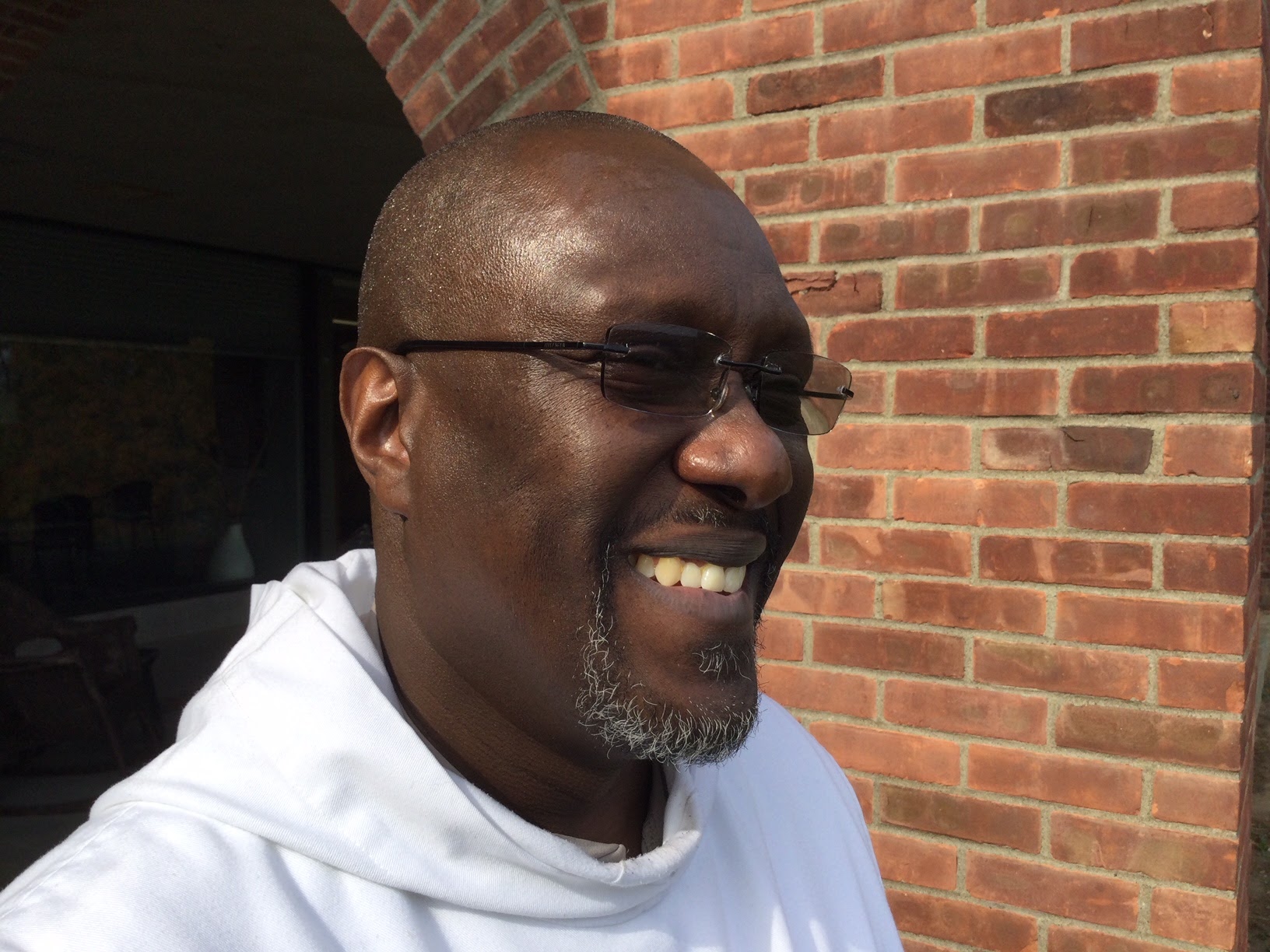
Br. Francis Daniel Beckham, OHC

The Feast of Saint Peter and Saint Paul, Apostles, June 29, 2023

Ezekiel 34:11-16

2 Timothy 4:1-8

John 21:15-19


May the words of my mouth and the meditations of my heart be pleasing to you, O God, my stronghold and my comforter. Amen.

What does it mean to love? To be loved? What does it feel like? How do we behave towards the ones we love? And what do we do to take care of them? Naturally, our answers will depend on exactly whom we love, what kind of love we’re feeling toward them – romantic, friendship, familial – as well as our own needs, past experiences, expectations, and circumstances.

When we’re teenagers or young adults, for instance, experiencing the reciprocated affections of a crush for the first time, we’re likely to feel infatuation and excitement, accompanied by a grand delusion of devotion: “This is the one!” we tell ourselves. “This is the real thing! If we were ever to break up (which we definitely won’t) I’d never find anyone else to love ever again!” We aren’t usually disingenuous our first time out the gate; it’s just all new and wonderful to us, and we haven’t yet got the benefit of experience to help us have a slightly more measured perspective on the matter.

Love hits much differently when, later down the road, a first-time parent holds their newborn in their arms and realizes what absolute, unshakable, unconditional love and devotion really feels like. Or when, in our middle or later years we suddenly realize just how long a spouse, partner, sibling, cousin, or friend has stuck by us – someone with whom we’ve shared countless formative experiences including both the highs and lows of life, resulting in deep, abiding friendship.

When we’re blessed with a soulmate who just ‘gets’ us, we discover a different way of feeling love for someone – a way marked by sincere gratitude for having a person in our life who makes us feel seen, heard, understood, and appreciated for who we are, warts and all. We’re much more careful to guard and nurture these kinds of relationships because of how much they genuinely mean to us. And the older we get, the more we learn to treasure them.

In reflecting on our Gospel reading, I was struck at the tenderness of the conversation between Jesus and Peter, and just how deep a friendship it reveals. I found myself returning again and again to Jesus’ opening question to Peter: “Simon, son of John, do you love me more than these?” It’s a remarkable thing to ask someone. “Do you love me? And do you love me more than anyone else does?” For many of us, I think this would be a terrifying question to ask or be asked. What if we don’t receive – or can’t give – the hoped-for answer?

Yet Jesus asks Peter this question two more times. He asks Peter if he loves him not because he needs to know, or because he doubts the sincerity of his answer – Jesus knows Peter better than anyone, and he’s fully aware that Peter loves him. Rather, Jesus asks because Peter needs to be assured of his love for Jesus. After all, in John’s Gospel, it’s only been a little while since Peter let his friend down in a pretty big way – and at a very crucial moment – by denying that he even knew Jesus, his friend. And he didn’t deny Jesus only once, but three times in a single night. This was not a friend-of-the-year moment, and we know how badly Peter feels about his behavior. In Matthew’s account of the Passion, we learn that, following his third denial, “[Peter] went out and began to weep bitterly.”

But Jesus isn’t trying to rub salt in the wound. Quite the opposite: he’s letting Peter know that their friendship is still intact, that the two of them are still okay. Jesus accepts that in any relationship there are bound to be moments of selfishness and hurt feelings. Knowing Peter as well as he does, he even tried telling him this was going to happen. “I know how you are, Peter,” we can hear Jesus saying, “and when the pressure’s on later, you’re going to panic and say something hurtful, even though I know you aren’t really going to mean it.”

In this intensely intimate moment between friends, where Jesus and Peter finally have an opportunity to talk alone for the first time since Maundy Thursday, the wounds of the past begin to be healed. In contrast to the three denials, Jesus gives Peter the chance to state his love for him three times, even though Peter, true to form, initially fails to recognize this as an act of healing and is, instead, quite hurt. This is, for me, the most difficult part of the passage. It’s the part that reminds me that being loved hurts as much as it heals – and that being loved can be one of the most difficult things in the world, especially when I feel it coming from someone I don’t believe I deserve to receive it from.

During my lectio with this passage, I imagined Jesus staring directly into Peter’s eyes, questioning him in a steady, but gentle, voice, almost as if saying, “Peter, I know you love me. Please forgive yourself and move past this with me by taking care of those entrusted to me by the One Who Sent Me. I need you to do this now, and I know you will do it well, because you know what it’s like to feel. Follow me.”

In this moment Jesus extends to Peter the surest sign of love there is: Mercy. It’s the same loving mercy Jesus wills for each of us, whether we’re always able to believe it or not. There’s never an “I told you so” or “How could you have done what you did” or “You’re going to have to prove you’re sorry before I’ll ever be able to trust you again.” No, only mercy. Jesus says to Peter and to each of us, “I know you’re not perfect, and I love you every bit as much as I always have. Every. Single. One. Of. You.”

And so, after cooking a meal for Peter and the others (another sure sign of love almost any of us can relate to) and sharing a heart-to-heart with him, Jesus entrusts the well-being of the nascent Church to Peter with a clear example of just how he expects him – and us – to go about “tending his sheep.” Love them, nurture them, forgive them, and be merciful.

Jesus, being the true friend he was to Peter, did not mince words about how difficult this was going to be, or about the fate he would eventually meet. The same would prove to be true for Paul, who himself would later be called by Jesus and accepted by the apostles through a particularly extraordinary show of mercy, and who would then join Peter in feeding and tending the flock, even at the eventual cost of his own life.

Both apostles were invited – as all of us are – to give up control of their own lives and destinies out of love for Christ and those beloved of Christ – that is, everyone. This was no summer fling; this was the deepest, truest kind of love the likes of which we can only catch glimpses of this side of Paradise, but which nevertheless stirs each of our hearts to care for others – those we know, and those we don’t – preparing and sharing a meal where there is hunger, extending mercy where there is shame and despair, and welcoming all we encounter along the path of following in the Way.

I pray that each of us, following in the example of Peter and Paul, will embrace Jesus’ invitation to love, and feel ourselves loved by, God, forgiving ourselves and one another, feeding and tending this big, wounded, wonderful flock – and always with gentleness and mercy.

May peace and all that is good be with each of us and those we love today and always. Amen.

Sunday, June 25, 2023

Proper 7 A - June 25, 2023

Holy Cross Monastery, West Park, NY

Br. Josep Martinez-Cubero, OHC

The Fourth Sunday after Pentecost (Proper 7), June 25, 2023

 
Genesis 21:8-21
Romans 6:1b-11
Matthew 10:24-39
 

The desert monastics tell the story of Abba John who prayed to God to take away his passions so that he could become free of inner turmoil. Abba John reported to his spiritual elder, “I now find myself in total peace.” His spiritual elder said to him, “Really? Well, in that case, go and beg God to stir up warfare within you again, for it is by warfare that the soul makes progress.”

Today’s lectionary calls us to spiritual warfare, to choose between what is our will for God and what is God’s will for us. We are invited to hear the voice of God calling to us to make right choices in the midst of the confusion and the chaos of this world, and the chaos we manage to create in ourselves because of our blind self-interest. A blind self-interest presented so very well in the story we heard from Genesis. There are big choices to be made, important choices. And Abraham, the one chosen by God to make them, says he is listening to God when he clearly can’t distinguish God’s voice from his own. And his wife Sarah’s motive is not to do the will of God, but to see that God does hers!

Abraham says he is listening to God, who tells him to listen to Sarah and “send Hagar out”, meaning out to die in the desert! Sarah’s jealousy and greed drive her to wield her power over Hagar. It is her position of privilege that leads them to cast Hagar and Ishmael out. And one thing I know about God is that God does not entitle us to use our power against the powerless just because we can. God calls us to be strong in the Lord, and not in our own power, desire, or privilege! And though the story tells us that Abraham is distressed about “sending Hagar out,” well, he does, regardless of her innocence, and regardless of the child. He gives in to a false sense of peace rather than facing the cowardice that stops him from making the choice that is just for both, Sarah and Hagar, let alone Ishmael and Isaac. And he blames his choice on God!

Hagar becomes the one who has lost everything, the refugee, and the mother desperate to save her child. Her story is repeated over and over again with the more than 89 million people around the world who have been forced to flee their homes, among whom 27 million are refugees, and around 41 per cent of whom are under the age of 18. That‘s right! Children perish on a daily basis, and parents mourn in their helplessness to protect them. For millions, the story is not that God has heard the voice of the child and will make a great nation of them! For millions that story is that they will perish. And many wonder where is God? And God asks us: “Where are you??”

Hagar’s story is also repeated here in the United States through national laws and policies that have created groups of expendable people, many of them children and single parents, whose well-being seems to be of no concern when law and policy makers, representing us, make decisions designed to protect our systems of consumption, consumerism, and never-ending desire for profit at the huge cost to the majority of people, not only here in the US, but around the entire world. So, this morning’s story from Genesis may seem old and outdated, but it really is as new as today’s newspaper. And it is not a story about holiness or listening to the voice of God. It is a story about sin and calling upon God to justify it. Discerning what is the voice of God from all the other voices around us takes a lot of spiritual effort. And it can often feel like spiritual warfare.

Jesus’ call in today’s Gospel lesson is a challenging one: “I have not come to bring peace,” Jesus says, “but a sword.” If you are like me, you read that kind of statement from Jesus and think: “Well, I’m confused! Aren’t you supposed to be the Prince of Peace?” I struggled with this one until it finally dawned on me. Jesus’ peace is not about making sure everyone is happy or being careful not to ruffle any feathers. It’s not about keeping the peace, but about making peace. It is the kind of peace that can be dangerous and, for Jesus and many of his earliest followers, would bring about the sword from those who found his peace threatening. Jesus’ peace will end up causing divisions, even among close family members and friends. It is the kind of peace achieved only when there is justice. And as we know too well today, justice does not always win the seat of power. So, Jesus’ peace is the peace possible when things covered up are uncovered and secrets eventually become known. And we should never fear those who will lash out at us for bringing truth to the light and proclaiming Jesus’ good news from the housetops. Jesus’ call is a call to do, not what the world expects, but what God expects. It is a call to be prophets of the Most High.

“Nothing is covered up that will not be uncovered” says Jesus. It was Sarah and Abraham who wanted Hagar sent out. It was not God. God rescued Hagar and Ishmael from Abraham and Sarah’s selfish and sinful hand. When we read the Holy Scriptures truly fundamentally, we see example after example of the human propensity to call upon God to justify our sin. God’s call is always to “do justice, love mercy, and walk humbly with God”. God’s call in never for oppression or violence or bigotry or sexism or homophobia or ecological devastation or disregard for the poor! God’s will is about love, and care, and mercy, and justice, and community, and compassion. That is the will of God! So, Jesus calls us to make choices, to take a stand for what is right, and to work to change what is wrong. It is only through this spiritual warfare that our souls can make the progress needed to abide in God’s love. And for those who don’t feel ready, I leave you with the words of Ronald Rolheiser:

“Not even Jesus found ‘the ready.’ Jesus called Nathaniel… Nathaniel lacked openness. Nathaniel wasn’t ready. Jesus called Philip… Philip lacked simplicity. Philip wasn’t ready. Jesus called Simon, the Zealot… Simon lacked non-violence. Simon wasn’t ready. Jesus called Andrew…Andrew lacked a sense of risk. Andrew wasn’t ready. Jesus called Thomas…Thomas lacked vision. Thomas wasn’t ready. Jesus called Judas…Judas lacked spiritual maturity. Judas was definitely not ready. Jesus called Matthew…Matthew lacked a sense of social sin. Matthew wasn’t ready. Jesus called Thaddeus…Thaddeus lacked commitment. Thaddeus wasn’t ready. Jesus called James the Lesser…James lacked awareness. James wasn’t ready. Jesus called James and John, the sons of thunder… James and John lacked a sense of servanthood. James and John were not ready. Jesus called Peter, the Rock…Peter lacked courage. Peter was not ready. The point, you see, is that Jesus doesn’t call the ready. Jesus calls the willing.” ¡Que así sea en el nombre del Padre, del Hijo y del Espíritu Santo! ~Amen+

Saturday, June 24, 2023

The Nativity of Saint John the Baptist - June 24, 2023

Holy Cross Monastery, West Park, NY

Br. Luc Thuku, OHC

The Nativity of Saint John the Baptist - Saturday, June 24, 2023


In 1859, Joshua Abraham Norton declared himself Emperor of the United States. Norton had made and lost his fortune in San Francisco shipping but he wanted a new identity, that is, America’s first emperor. When The San Francisco evening bulletin printed “Emperor” Norton’s announcement, most readers laughed. Norton made pronouncements aimed at correcting Society's ills, printed his own currency and even wrote a letter to Queen Victoria asking her to marry him and unite their Kingdoms. He wore royal military uniforms made by local tailors. One observer said Norton looked “every inch a king” but of course he wasn’t! We don't get to make up who we are!

 Today we Celebrate the birthday of St. John the Baptist. I do not know about you but when I hear the name John the Baptist, the first thing that comes to mind is filth; a dirty smelly man dressed in a skin tied with a rope, who does not shower and who has a bad breath stemming mainly from his diet of locusts and honey, with lice and mites from his unshaven head and beard, and on top of all that a sharp tongue! John, however, is one of the most unusual and important people in the history of our faith. He bears the titles of prophet, forerunner, and Baptist because he fulfilled all these roles. He is the only other person apart from Our Lord Jesus Christ and His blessed mother Mary whose birthdays we celebrate liturgically. For all the other saints, we mostly celebrate their feast days on the date of their death. We celebrate the birthdays of Jesus, Mary and John because of their significance in the history of our salvation. Today's feast sheds light on the significance of John as the fore runner of Christ. John is regarded as the last of the Old Testament prophets and he witnessed martyrdom while witnessing to the truth. Jesus in Matthew 11:11 says that of all men born of women, none is greater that John the Baptist! This was because he made himself least although he had all the glory in Israel and many people even considered him to be the Christ. He put himself under the shoes of the Christ and even witnessed that he was unworthy to loosen the strings of Christ’s shoes.

The birth of John the Baptist was a blessing first to his parents and then to the whole of humanity. His mother Elizabeth, thought of as barren and therefore cursed, was vindicated and henceforth regarded as blessed! John was also a blessing to his father Zechariah who was told by the angel announcing his conception that “he will be your joy and delight” (Luke 1:14). It was also for Zechariah a fulfilment of the divine promise, especially when he recovered his speech to confirm the name of the boy. For humanity, the birth of John brought joy and conversion as foretold by the mouth of the angel “ many will rejoice at his birth, for he will be great in the sight of the Lord. Even from his mother’s womb he will be filled with the holy spirit and he will bring many of the Israelites back to the Lord their God. With the Spirit and the power of Elijah, He will go before him to reconcile fathers to their children and the disobedient to the good sense of the upright, preparing for the Lord a people fit for him” (Luke 1:14-17).

“His name will be John!”…says the angel to Zechariah before John was conceived. “His Name is John!”… confirms Zechariah to those who had attended the naming ceremony! In the gospel reading today, We hear of the birth and naming of John the Baptist. Here God’s graciousness was revealed to the world through the name given to the child. The name John means God is gracious! We are told that as Zechariah regained his speech as he named his child, all those who heard of it treasured it in their hearts. They wondered what the child will turn out to be and indeed the hand of God was with him.

My dear brothers and sisters, in our present day society where it seems like the light of Christ is dimmed, we are invited to contemplate upon the person of John the Baptist, who prepared the way of the Lord and bore witness to that one true light who is our Lord and Savior Jesus Christ. We are all called to reflect and bear witness to that light of Christ in bringing about true conversion to the world and a radical possession of the Kingdom of God.

We may ask ourselves how we can reflect and bear witness to Christ in our day and age. John the Baptist is our best teacher in this regard. In John 3:30, John the Baptist says that “Christ must increase and I must decrease!” We should never forget that we fell from glory through pride and that the greatest virtue that our  Lord has manifested in order to save us is his humility, the opposite of that which makes us perish. It is indeed the humility of Christ that saves us, his greatest gift that helps us find healing from our fall. The Lord himself sets up humility as a condition in order to learn anything divine. He tell us to take his yoke upon us and learn from him: for he is meek and lowly in heart (Matt.11:29). If we learn the humility of Christ, we will be able to perceive two realities, that is, the divine reality and human reality. We will perceive the presence of God in everything and in everyone and we will also perceive the falsehood in us. God has planted in us the potential to know our creator and to unite with him, and if we see God in everyone, we can honor and love every human being as ourselves. However, if we are to perceive that image in others, we need to be humble for humility attracts grace and grace is the light of life. Without humility, we remain blind and can understand nothing divine and nothing human.

The greatness of John the Baptist therefore lies in the fact that he was so humble as to be able to recognize in the humble form that the Lord assumed in order to come to us, the almighty God, the one who is. John was the only person at the time to recognize Jesus as the lamb of God and pointed his own disciples to him and these disciples eventually became the followers of Jesus and pillars of the Christian faith and of the Christian community.

In humility, there is selflessness that prepares man to receive the selfless love of God which saves and perfects. Pride is selfish and selfishness can neither love nor have communion with others, nor receive the spirit. Pride feels threatened by humility because humility is light and this light silently reveals the darkness of pride.

God’s greatness is unfathomable. He visits those who are sanctified from the wombs of their mother, like John the Baptist, but nothing prevents him from also bringing the worthy out of the unworthy, and reveal great people by healing their woundedness. We should not compare people’s journeys of faith because each is unique, but those who receive grace having been wounded by sin before, are more able to appreciate grace, humble themselves, have great gratitude and make great strides. Therefore take heart, brethren, for there is hope for us!

So what is in a name? In our opening story, Norton thought that by declaring himself emperor he had become one.  He thought a new title would make him re-invent himself and even make him popular. That never happened. It only succeeded in bringing out sarcasm and fun to those who heard about it then, and to those who read about it now. John on the other hand was named by God and lived up to his name. He pointed others to God’s graciousness and lived a gracious life. He fitted in God’s plan for him unto death.

Many of us spend years searching for who we are and wondering what value we posses. We stress trying to name ourselves and trying to create identities that most of the time alienate us, when only God can truly tell us the truth about who we are. Thankfully, God calls us sons and daughters when we encounter and develop a relationship with him through His son Jesus. John 1:12 tells us that  to all who receive him, he gave the right to become children of God”. This identity is purely a gift. We are his beloved children “born not of human decision but born of God” John1:13.


Amen